AI in Education: What It Can Do, What It Can't, and What to Watch
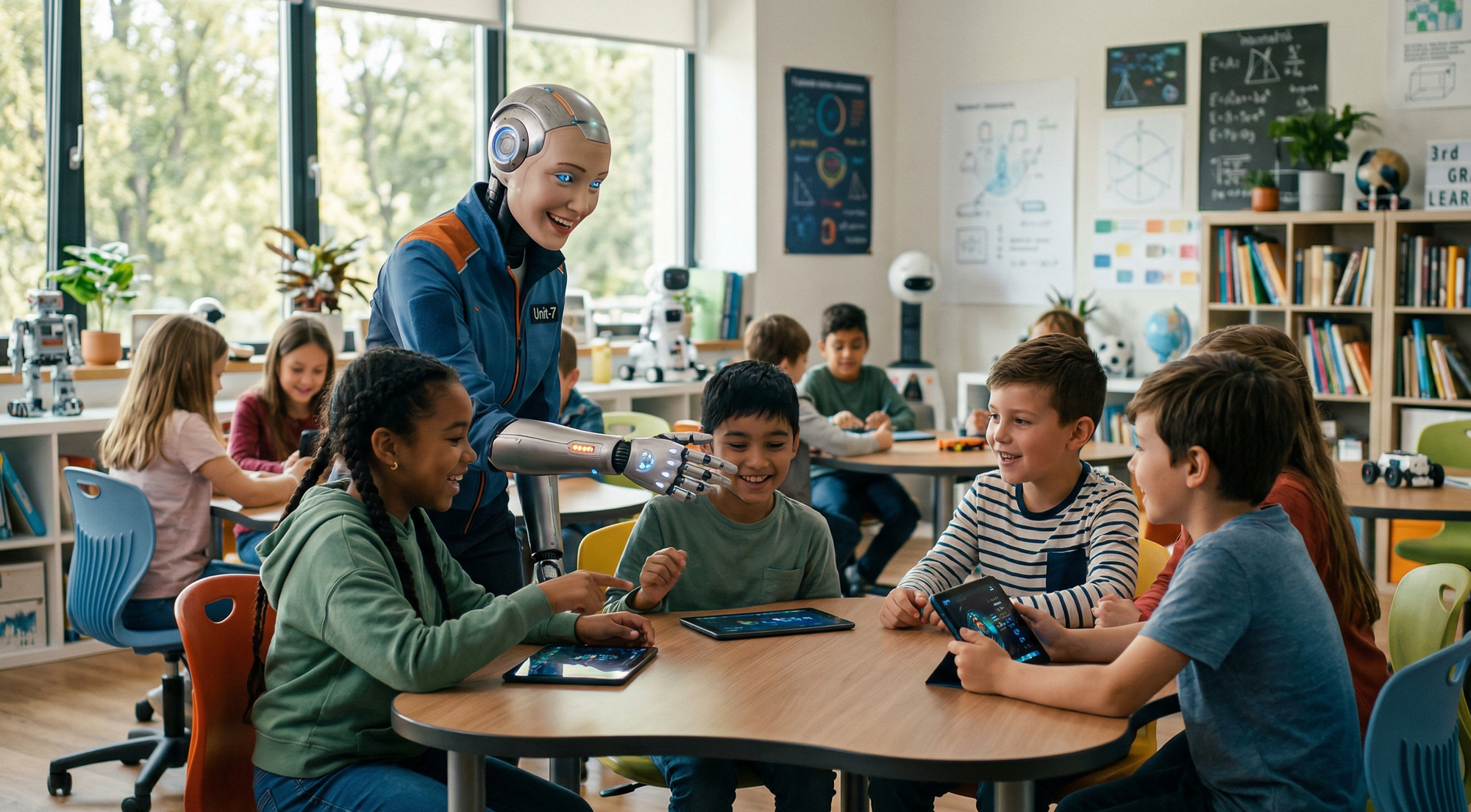
The pitch for AI in education sounds irresistible: every student gets a tutor calibrated to their pace, their gaps, their learning style. No waiting lists, no scheduling conflicts, no teacher stretched across thirty kids who all need different things. It's a genuinely compelling idea. The question worth asking is how much of it is real.
More than people think. And less than the vendors will tell you.
Personalization Works. The Catches Are Real Too.
Intelligent Tutoring Systems, software that adapts lesson difficulty and pacing based on how a student responds, have been around longer than most people realize. The AI wave has made them considerably more capable. In K-12 STEM settings, research on AI integration in K-12 education shows measurable gains in personalized learning and operational efficiency. Students get feedback faster. Teachers spend less time on rote assessment and more time on the work that requires a human.
That same research flags three problems worth sitting with. First, algorithmic bias: if the training data over-represents certain student demographics, the system optimizes for those students and quietly underserves others. Second, privacy. These systems collect a lot of data about how children think, struggle, and fail. The governance frameworks for that data are still catching up to the deployment. Third, the erosion of mentorship. A system that answers every question efficiently may also train students to expect answers rather than develop the tolerance for confusion that real learning requires.
None of those problems disqualify the technology. They do mean that dropping an AI tutoring system into a school without an ethical governance layer is not a neutral act.
Higher Ed Chatbots: Useful, Unreliable, and Necessary Anyway
Universities have been experimenting with LLM-powered chatbots for student support, the kind of 24/7 system that answers questions about enrollment, deadlines, financial aid, and campus services without routing everyone through an office that closes at 5pm. Studies on chatbots for international student support show real improvements in engagement and information access, particularly for students whose first language isn't English and who may hesitate to ask a human administrator basic questions.
The risk everyone already suspects is confirmed in the research: these models generate incorrect or biased outputs with enough frequency to matter. A student who gets wrong information about a visa deadline from a chatbot at 11pm on a Sunday does not have good options. The fix is human oversight in the loop, a design choice that costs money and slows down response times, which is exactly why institutions skip it. They shouldn't.
Separate work on AI chatbots in higher education learning environments found that students using LLM-integrated tools reported better learning experiences. That result is real. So is the asterisk attached to it: better experience is not the same as better learning. Students consistently rate interactions as more helpful than post-assessment scores sometimes confirm.
Frontier Models and the Curriculum Question Nobody Wants to Answer
A 2024 systematic assessment of OpenAI's o1-preview model in higher education tested the model across 14 cognitive dimensions, including critical thinking, systems thinking, and metacognition. The model performed at or near human instructor level on several of them. That result received much less attention than it deserved.
If a frontier AI model can demonstrate higher-order thinking on par with a qualified instructor, the question for curriculum designers is not whether to use it. The question is what human instructors are now for. That is not a rhetorical provocation. It is a genuine design question that most institutions are avoiding by treating AI as a support tool and moving on.
The complicating finding comes from research on how AI systems affect human critical thinking. Generative AI improves task performance and efficiency. It does not appear to improve the underlying cognitive capability of the person using it. Students who use AI tools get better outputs. They do not necessarily get better at thinking. Those are different outcomes, and conflating them is how you end up with graduates who are fluent in prompting and rusty at reasoning.
Who Gets Left Behind: The Equity Problem Hiding in Plain Sight
Parental income is not a variable most AI education systems are designed to account for. It should be, because research on explainable AI in education finds it is one of the dominant hidden variables shaping AI-driven academic decisions. When an AI system predicts a student's likely performance, recommends a course path, or flags a student as at risk, it is drawing on patterns in historical data. Those patterns reflect decades of unequal access to resources, tutoring, test prep, and stable housing. The model learns the correlation and treats it as signal.
Work on algorithmic fairness in grade prediction and expert surveys on fairness in AI for education both reach the same conclusion: fairness constraints have to be built in at the design stage. Retrofitting them after deployment is technically possible and almost never done. An AI system that automates admissions, course placement, or academic risk assessment without explicit fairness guardrails does not produce neutral outcomes. It scales existing inequality faster and with more confidence.
On the other side of the equity ledger: AI is doing something genuinely valuable for students with disabilities. A 2025 study on AI-powered audio learning platforms found that tools like Audemy can deliver real-time, personalized, interactive education to blind and visually impaired students. This population has been chronically underserved by digital education technology designed primarily around visual interfaces. Accessible-by-design AI is not a niche accommodation. It is what good design looks like when the people making decisions actually include the full range of people who will use the thing.
The Honest Summary
AI makes personalized learning more achievable at scale. It makes support services more accessible across time zones and language barriers. It opens doors for students with disabilities that previous technology kept shut. Those are real gains and they are worth pursuing.
AI also amplifies bias at scale, generates confident wrong answers, and may be training a generation of students to retrieve rather than think. Research on metacognitive interventions in AI-assisted learning is actively trying to address the last problem, with approaches that make AI reasoning visible to students rather than just delivering conclusions. That direction is promising. It is also not yet standard practice anywhere.
The institutions that will get this right are the ones that treat AI as infrastructure requiring safety standards, not as a product to be adopted and celebrated. The ones that will get it wrong are the ones running pilots because someone read a press release.